


Voyagez plus lentement, restez plus longtemps en Afrique
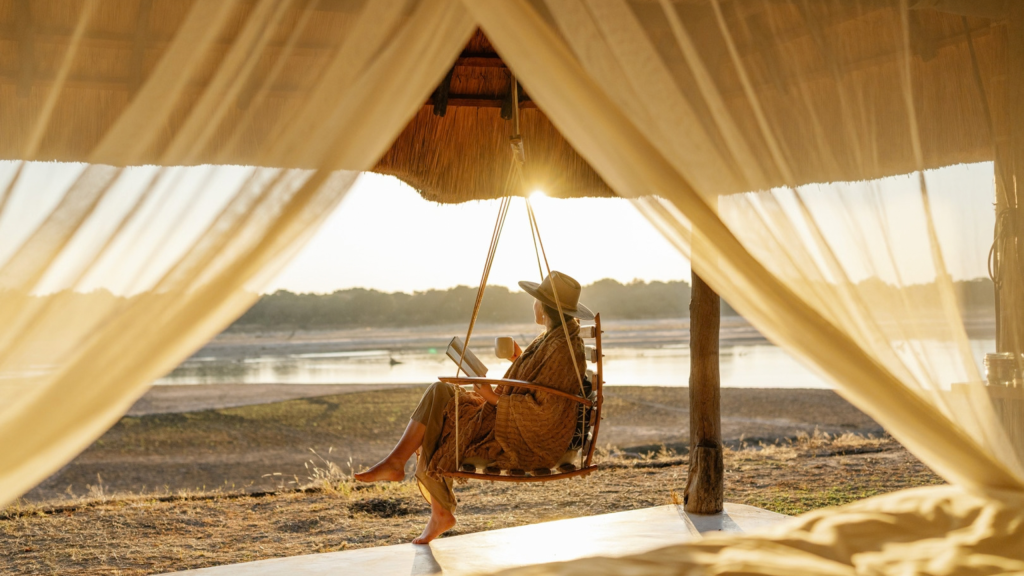
Why the Best African Journeys Aren’t About Seeing Everything Imagine waking up in the African bush with absolutely nowhere else you need to be. No bags to pack. No transfer to catch. No alarm reminding you that you have precisely 47 minutes to eat breakfast before moving on to your next destination. Just a steaming cup of coffee, the distant call of a fish eagle and the delicious possibility of an entire day unfolding at its own pace. Perhaps you’ll head out on a game drive. Perhaps you’ll spend the morning watching elephants wander past the waterhole. Or perhaps you’ll finally finish that book you brought all the way from home. Whatever you choose, there’s no hurry. It sounds simple, doesn’t it? Yet in a world where holidays are often measured by how many places we’ve visited and how many experiences we’ve squeezed in, giving ourselves permission to slow down can feel surprisingly indulgent. When it comes to planning an African safari, we’re often tempted to see everything. After all, if you’re travelling halfway around the world, shouldn’t you make the most of every minute? Absolutely. But making the most of your time and filling every minute of it are two very different things. Welcome to the luxury of slow travel in Africa, where sometimes the most extraordinary thing you can do is stay exactly where you are. The hidden cost of trying to see everything Africa has a way of making even the most decisive traveller wildly ambitious. You start with a perfectly reasonable plan to visit Botswana. Then someone mentions Victoria Falls. And wouldn’t it be wonderful to see Cape Town while you’re there? Before you know it, you’re wondering whether you could possibly squeeze in the Serengeti too. We understand the temptation. Truly. Africa is extraordinary and every destination seems to offer something completely different. But here’s what doesn’t always make it into those beautiful, colour-coded itineraries: the time it takes to get from one place to another. A journey that looks wonderfully straightforward on a map might involve an early-morning departure, a light aircraft, a connecting flight and a road transfer. By the time you’ve reached your next lodge, much of the day has disappeared. Then, just as you’ve unpacked, settled in and started to recognise the staff, it’s time to do it all again. Of course, there’s nothing wrong with a multi-destination African adventure. Combining different countries, landscapes and experiences can make for a magnificent holiday, especially when you have enough time to enjoy each one. The trick is knowing when another destination will enrich your journey and when it will simply make it busier. Because Africa isn’t going anywhere. And you don’t have to see all of it on your first visit. Why slow travel makes for a better African safari There’s a lovely moment that happens when you’ve been somewhere for a few days. You stop feeling like a visitor who has just arrived and begin to settle into the rhythm of the place. You know which way the sun rises over the waterhole. You recognise the bird that makes that peculiar noise outside your room every morning. You’ve learned that your guide has an extraordinary talent for spotting leopards and an equally extraordinary collection of terrible jokes. And, rather wonderfully, you stop checking the time quite so often. On safari, staying longer also gives you more opportunities to experience the unexpected. Wildlife doesn’t follow an itinerary. Lions have absolutely no interest in your departure schedule and that elusive leopard certainly hasn’t received a copy of your wishlist. A longer stay gives you the freedom to return to an interesting area, follow up on a sighting from the previous day or explore a completely different part of the reserve. It also allows you to experience more of what a lodge has to offer. Perhaps there’s a guided walk you’ve been curious about, a peaceful afternoon beside the pool or a wonderful dinner beneath the stars that you might otherwise have missed. Then there are those gloriously unplanned moments. The elephant that wanders past while you’re having lunch. The conversation with your guide that continues long after the game drive has ended. The afternoon you decide to do absolutely nothing and discover that doing nothing in Africa can be rather spectacular. For many travellers, spending three or four nights in one safari area rather than rushing through several one-night stops creates a far more rewarding experience. Not because you’ve seen more, necessarily. But because you’ve had the time to appreciate what you’ve seen. Sometimes the best itinerary is the one with something missing When you’re planning a luxury African safari, it’s easy to assume that adding another extraordinary destination will make your holiday even better. Sometimes it will. But sometimes the most valuable thing an experienced Africa travel specialist can do is suggest taking something out. Imagine a couple planning a two-week African adventure. Their wishlist includes Cape Town, the Winelands, Victoria Falls and two different safari destinations. All wonderful choices. But once we start looking at the travel times, flight schedules and the number of nights available in each place, it becomes clear that they’re going to spend rather a lot of their holiday moving around. What if we removed one destination? Suddenly, there’s time for an extra night on safari. A leisurely afternoon in the Winelands. Perhaps even a whole day without a single scheduled activity. The trip hasn’t become less exciting. It has become more enjoyable. That’s the difference between simply fitting destinations together and designing a journey around the people taking it. At Hassle-free Africa, we believe a thoughtfully planned itinerary should have room to breathe. It should reflect your interests, your energy levels and the kind of experiences that make you happiest. Some travellers love being constantly on the move. Others want long, unhurried days with plenty of time to absorb their surroundings. Most enjoy a little of both. The important thing is knowing which kind of traveller
Pourquoi le contact humain compte plus que jamais dans les voyages
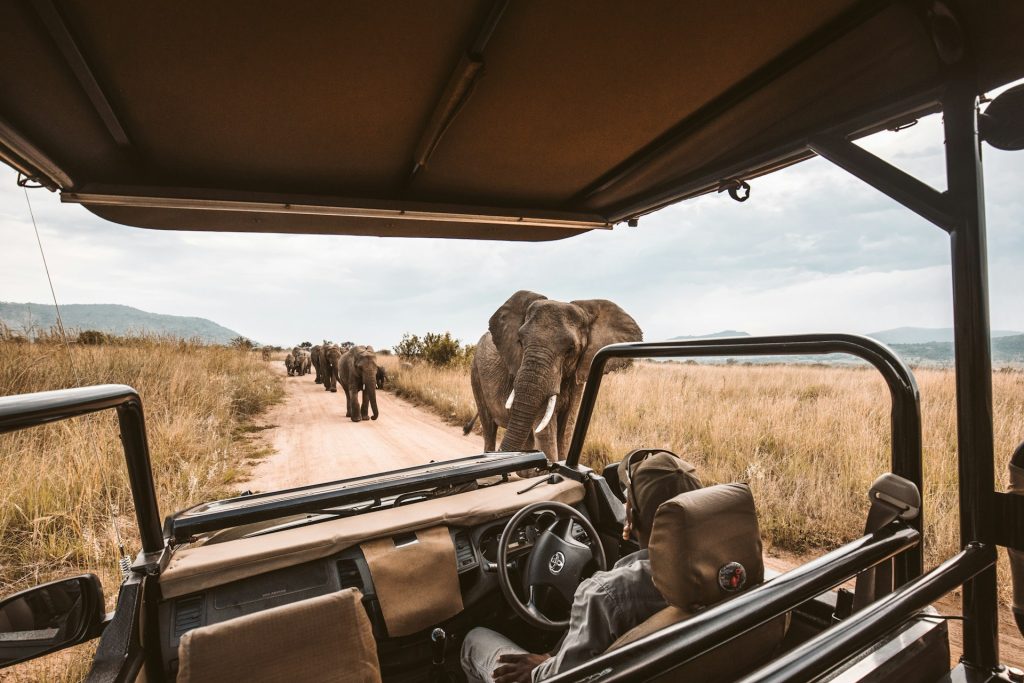
There has never been an easier time to start dreaming about Africa. You can open your phone, type a question and, within seconds, have a suggested route through Botswana, a list of lodges in the Serengeti, advice on when to see the Great Migration and a perfectly respectable itinerary combining Cape Town, Victoria Falls and safari. It’s rather wonderful, actually. Artificial intelligence has made an enormous amount of travel information instantly accessible and travellers are embracing it. Research published in 2026 found that 33% of travellers expected to use AI tools such as ChatGPT, Gemini, Copilot or Claude to help plan their trips. Among those travellers, AI was most likely to be used for recommendations, itinerary planning, discovery and comparisons. Only 13%, however, expected to use it for the actual booking. That gap is interesting. Because while AI can give you a hundred answers, sometimes what you really need is a human who knows Africa to help you choose the right one. How AI Is Changing Travel Planning Let’s get one thing out of the way first: we are not anti-AI. Far from it. Technology can be a brilliant travel companion, particularly at the dreaming stage. Ask it where you can see gorillas and you’ll quickly find yourself reading about Uganda and Rwanda. Wonder whether July is a good month for Botswana and it can explain the Okavango Delta’s unusual flood cycle. Give it two weeks and a wishlist involving safari, wine and a beach and it will happily start joining the dots. AI is increasingly becoming part of the way people research travel. Phocuswright reported in 2026 that generative AI platforms had reached 33% usage for trip research among US travellers surveyed, five times the level recorded in 2024. Used well, these tools can help you ask better questions, discover places you hadn’t considered and work out what excites you. But planning an African safari isn’t quite the same thing as gathering information about one. And that is where things become more interesting. Why African Safari Planning Still Needs Human Expertise Imagine you ask an AI travel planner for five wonderful safari lodges. It may give you five genuinely wonderful safari lodges. The problem is, that still doesn’t tell you which one is wonderful for you. Perhaps one has a beautifully romantic atmosphere but you’re travelling with three children and need somewhere that will embrace the happy chaos. Perhaps another offers sensational wildlife but its daily rhythm revolves around very long game drives and you know, deep down, that four hours in a vehicle before breakfast might test the limits of family harmony. One lodge may look conveniently close to your next stop when you view the journey on a map, yet getting between them involves a flight, a lengthy road transfer and most of a precious holiday day. Another property that doesn’t appear on every “best safari lodges in Africa” list might turn out to be exactly right for you. Because however sophisticated AI becomes, the information it gives you is drawn from information that has been published or otherwise made available to it. It hasn’t stayed at the lodge. It hasn’t travelled that route, met the team or spoken to trusted partners on the ground about what the experience is really like right now. That real-world knowledge can make all the difference. This is where an experienced Africa travel specialist earns their keep. Good African safari planning isn’t simply about identifying excellent places. It is about understanding which excellent places belong together for a particular traveller. The difference is discernment. It comes from knowing destinations, talking to people on the ground, understanding how camps operate and learning over many years which seemingly small details can completely change the feel of a trip. Sometimes It’s What You Don’t Say There is another thing algorithms haven’t made obsolete: conversation. Someone might tell us: “We’d love to go on safari, but we’re not really safari people.” On paper, that sentence makes almost no sense – but in conversation, it makes perfect sense. Maybe they don’t want to spend every waking hour searching for animals. Perhaps they like wildlife but also want beautiful food, time beside the pool, interesting people, scenery and the freedom to occasionally do absolutely nothing. Perhaps what they’re really saying is: we want Africa, but we don’t want to feel as though we’re on a wildlife boot camp. That changes what we recommend. Another traveller might announce that seeing the Big Five is their priority, then spend 20 minutes excitedly talking about birds, landscapes, local food and the possibility of sleeping beneath the stars. A good travel conversation reveals things that a checklist often doesn’t. That is the real value of personalised African safari planning. The itinerary starts with the person rather than the places. The People You Never See Behind Your African Safari There is a wonderfully human chain behind almost every great journey through Africa. Your guide who knows from a distant alarm call that something interesting may be happening beyond the trees. The camp manager who remembers how you like your coffee. The driver waiting when your little aircraft touches down on a dusty airstrip. The lodge team arranging a surprise sundowner because somebody mentioned, almost in passing, that it was an anniversary. Behind them are reservation teams, local operators, pilots, conservationists, chefs, trackers and countless other people who make travel across this enormous continent work. And behind your itinerary, there are conversations too. When an Africa travel specialist recommends a route, there is often far more happening than searching availability and pressing “book”. We speak to the people who know these places intimately. We ask questions. We check details. We work with trusted partners on the ground and draw on relationships built over time. Travel may increasingly begin with an algorithm. The best journeys are still wonderfully full of humans. What Happens When Travel Plans Change? Then there is the part nobody particularly wants to think about while dreaming of Africa. Things
Ebola et voyage en Afrique : ce que les voyageurs ont vraiment besoin de savoir
When Headlines Travel Faster Than Facts Few words capture attention quite like “Ebola.” When news of an Ebola outbreak appears in the headlines, it’s understandable that travellers become concerned. Questions quickly follow: Is it safe to travel to Africa? Should I cancel my trip? Could an outbreak affect my holiday? The challenge is that headlines often travel faster than facts. Africa is an enormous continent made up of 54 countries, thousands of cultures, and landscapes that stretch from deserts and rainforests to coastlines and mountains. Yet news reports can sometimes create the impression that an outbreak in one region affects the entire continent. In reality, Ebola outbreaks are typically localised events that occur in specific areas and are met with rapid public health responses. In many cases, popular tourism destinations are hundreds or even thousands of kilometres away from the affected region and continue operating normally. That doesn’t mean Ebola isn’t serious. It is. But understanding how Ebola outbreaks occur, how the disease is transmitted, and how quickly authorities respond can help travellers separate genuine risk from unnecessary worry. In this guide, we’ll explore what Ebola is, how outbreaks are managed, and what travellers really need to know about Ebola and travel in Africa. What Is Ebola? Ebola is a rare but serious viral disease that was first identified in 1976 near the Ebola River in what is now the Democratic Republic of the Congo. The disease belongs to a group of illnesses known as viral haemorrhagic fevers and can cause symptoms such as fever, fatigue, muscle pain, vomiting, and, in severe cases, internal and external bleeding. Without prompt medical care, Ebola can be life-threatening. Over the past several decades, outbreaks have occurred periodically in parts of Central and East Africa, most commonly in the Democratic Republic of the Congo and Uganda. While these outbreaks often attract significant international attention, they are usually confined to specific regions rather than affecting entire countries or the continent. Importantly for travellers, Ebola is not a new disease. Health authorities, governments and international organisations have decades of experience responding to outbreaks. Today, surveillance systems, rapid response teams, vaccination programmes and cross-border monitoring play a vital role in identifying and containing cases as quickly as possible. Understanding what Ebola is, and isn’t, is the first step towards understanding the actual level of risk for travellers. How Is Ebola Actually Transmitted? One of the biggest misconceptions about Ebola is that it spreads easily from person to person. In reality, Ebola is much harder to contract than many people assume. Ebola is transmitted through direct contact with the blood, bodily fluids, or tissues of a person who is infected and showing symptoms. It can also be spread through contact with contaminated materials such as bedding, clothing or medical equipment that has been exposed to infected bodily fluids. What Ebola does not do is spread through the air like a cold, flu or COVID-19. You cannot catch Ebola simply by being in the same city, staying in the same hotel, sitting on an aeroplane or walking through a national park. For travellers, this distinction is important. Casual contact with people, wildlife viewing on safari, game drives, boat trips and other tourism activities do not create a pathway for Ebola transmission. This is one reason why public health officials are often able to contain outbreaks relatively effectively. Because transmission requires close, direct contact, health authorities can focus on identifying cases, tracing contacts, and isolating those at risk, rather than trying to manage widespread airborne transmission. Understanding how Ebola spreads helps put the risk into perspective. While the disease is serious, it is not highly contagious in the way many people imagine when they first see the headlines. How Often Do Ebola Outbreaks Occur? Ebola outbreaks are relatively uncommon, but because of the disease’s severity, they understandably receive significant international attention when they occur. Since Ebola was first identified in 1976, outbreaks have been recorded periodically in a small number of countries, primarily in Central and East Africa. The Democratic Republic of the Congo has experienced the highest number of outbreaks, while Uganda has also reported several over the years. Much less frequently, outbreaks have occurred elsewhere in the region. What is often overlooked is that most outbreaks remain geographically limited. Rather than spreading across entire countries, they are typically concentrated in specific districts, provinces, or communities. In many cases, daily life and tourism continue normally in other parts of the same country, particularly where significant distances separate outbreak areas from major tourism destinations. Advances in disease surveillance have also improved the speed at which outbreaks are identified. Health authorities are now often able to detect cases earlier than in the past, allowing response measures to begin sooner and reducing the likelihood of wider spread. For travellers, this means that an Ebola outbreak in Africa does not automatically translate into a continent-wide travel concern. Understanding where an outbreak is occurring—and how far it is from your planned itinerary—is often far more important than the headline itself. As with many health-related events, context matters. A localised outbreak in one region of Africa may have little or no impact on a safari in Botswana, a beach holiday in Mozambique, a wine-tasting trip in South Africa, or a gorilla trekking adventure in Uganda outside the affected area. What Happens When an Outbreak Is Detected? When a suspected Ebola case is identified, public health authorities move quickly. Over the past several decades, governments, healthcare workers and international organisations have developed well-established systems for responding to outbreaks and preventing wider transmission. The first priority is confirming the diagnosis and identifying anyone who may have come into close contact with the infected individual. This process, known as contact tracing, is one of the most effective tools for containing Ebola. Health teams work to identify, monitor, and support people who may have been exposed, helping to break potential chains of transmission before they can spread further. Specialised treatment and isolation facilities are also activated where necessary.
Au-delà du lecteur de jeu
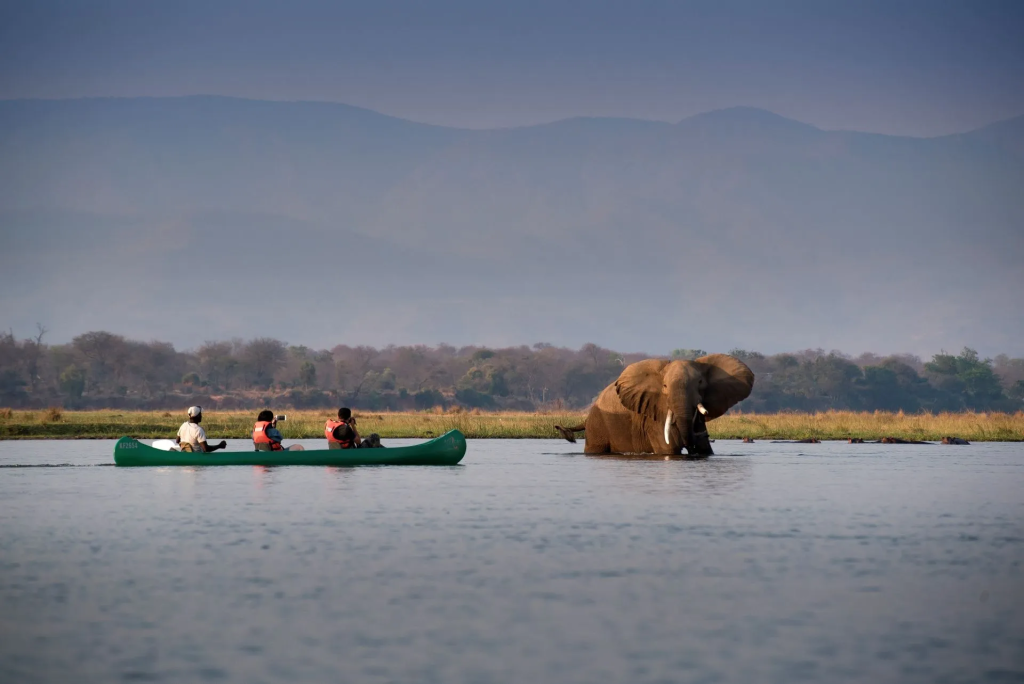
The Best Safari Excursions in Africa (and Where to Find Them) Safari, Reimagined For many, the idea of safari begins and ends with a game drive: lions in the grass, leopards in trees, and your ranger expertly tracking paw prints from behind the wheel. And while that remains iconic for good reason, the truth is, there’s so much more to experience in Africa beyond the vehicle. Today’s luxury travellers are seeking more than sightings. They’re craving depth, perspective, and moments that connect them to Africa’s landscapes, people, and rhythm in a way that feels personal and unfiltered. Think: the hush of a mokoro ride at dawn, a quiet walk beside a Maasai elder, or drifting silently past hippos from the seat of a canoe. In this guide, we share the most unforgettable safari excursions in Africa—and exactly where to go for the best of each. Whether you’re planning your first trip or your fifth, these experiences go beyond the expected and into something far more magical. Walking Safaris – Get Closer to the Wild There’s something quietly thrilling about stepping out of the vehicle and into the bush. No engine, no barrier- just your senses, your guide, and the slow rhythm of the wilderness. Walking safaris are about presence:noticing the spoor in the sand, the alarm calls of birds, the scent of crushed wild sage beneath your boots.It’s Africa, felt in your bones. Here are three of the best places to experience walking safaris, each offering a different flavour of wild: 1. Madikwe, South Africa: Malaria-free and majestic In South Africa’s Madikwe Game Reserve, guided bush walks offer a gentle yet immersive way to experience a Big 5 wilderness. It’s one of the country’s lesser-known gems – malaria-free, beautifully scenic, and ideal for families or first-timers wanting a soft introduction to walking safaris. Walks are led by experienced guides who focus on the smaller, fascinating details – tracks, insects, medicinal plants, and birdlife – while keeping an eye out for larger game. And after your walk? Return to a chilled drink, a private plunge pool, and a fire crackling at your luxury lodge. 2. Okavango Delta, Botswana: The classic Mokoro & Walk combo In the Okavango Delta, walking safaris are often paired with another deeply peaceful experience: themokoro. These traditional dugout canoes glide silently through reed-lined channels, before dropping you off for a guided bush walk on one of the Delta’s islands. This is walking safari in its purest form – wild, remote, and wonderfully off-grid. With a top professional guide at your side, you might follow elephant paths, observe lechwe in the marshes, or pause under a baobab tree and simply listen to the pulse of the wild. 3. Masai Conservancies, Kenya: Walk the land with its keepers For a walking safari rich in story, culture, and meaning, there’s nothing quite like a guided walk with the Masai in Kenya’s private conservancies. In places like the Porini Camps, you can explore the savannah alongside local Masai guides who know every plant, sound, and track like a second language. These walks are less about adrenaline, more about connection – to the land, to tradition, and to your place within it. It’s a grounding, graceful way to begin or end a safari day – and one that many travellers remember most. Cultural Encounters – Meet Africa’s Storytellers A safari isn’t just about wildlife – it’s about place, people, and perspective. For travellers who want to understand the stories behind the landscapes, cultural experiences offer a meaningful layer to any African adventure. These aren’t staged performances or quick photo ops – they’re respectful, community-based encounters that bring you into the heart of local life. Here are two of the most enriching places to connect with Africa’s people in ways that are authentic, engaging, and deeply human: 1. Hwange, Zimbabwe: Community Tourism with heart At the edge of Zimbabwe’s largest national park, Hwange, lies a network of vibrant communities that have coexisted with wildlife for generations. Several safari lodges here (particularly those involved with initiatives like Children in the Wilderness or Imvelo’s community programmes) offer genuine opportunities to engage with local villages, schools, and conservation projects. Guests might visit a rural homestead, learn about local traditions, or meet young learners at a nearby school supported by tourism. It’s a window into daily life – and a reminder of how sustainable travel can uplift and empower. 2. Masai Communities, Kenya: Stories shared in the shade The image of the Masai warrior is iconic, but what’s often missing is the depth behind the symbolism. In Kenya, especially when travelling with trusted partners like Gamewatchers Safaris and Porini Camps, cultural visits are not a side activity – they’re an integral part of your stay. Spend time with Masai elders, hear stories passed through generations, learn about beadwork, traditional medicine, or rites of passage. Many conservancies are co-managed with Masai communities, so every conversation, every walk, supports land stewardship and economic resilience. WHY IT MATTERS These cultural encounters aren’t about ticking a box – they’re about listening, learning, and acknowledging that the people of Africa are every bit as integral to the safari as the wildlife. For many travellers, it’s these conversations that linger long after the last game drive. Game Drives – The Classics, Perfected Game drives are the beating heart of most safaris – and for good reason. There’s something undeniably thrilling about cresting a ridge in the early morning light and locking eyes with a lion, or pulling up beside a herd of elephants quietly feeding under an acacia tree. But not all game drives are created equal. At Hassle-free Africa, we guide travellers to destinations where game drives are more than a checklist -they’re immersive, personal, and often spectacularly scenic. These three parks elevate the traditional safari drive into something unforgettable: 1. Mana Pools, Zimbabwe: Wild, free, and off-the-grid In Mana Pools, game drives are anything but conventional. Here, experienced guides are allowed to drive off-road and approach game on foot, offering