
Spring in Africa
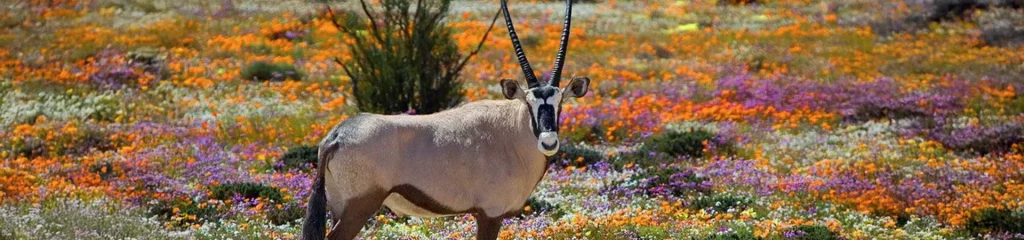
A Season of Renewal, Wonder and Wild Surprises There’s something quietly magical about spring in Africa. The earth exhales after the cool, dry months; landscapes burst into colour and life; and wildlife greets the season with tiny new arrivals. From carpets of wildflowers that ripple across South Africa’s west coast to the gentle splash of whale sharks gliding through Mozambique’s turquoise waters, spring is a season of contrasts. Spring in Africa is tender and full of promise, a season that whispers rather than shouts, inviting you to lean in, slow down and see nature’s quiet miracles unfold Baby Mountain Gorillas in Uganda In the emerald forests of Bwindi Impenetrable National Park, spring brings a tender kind of wonder. While mountain gorillas don’t have a single fixed birthing season, many infants are born around the time when food is most plentiful. By September and October, the forest is lush after the long rains, offering ample forage for nursing mothers and plenty of opportunities for visitors to glimpse tiny new arrivals Encountering gorillas is always profound, but seeing a mother gently cradle her infant or watching a wide-eyed youngster cling to her back is something else entirely. These baby gorillas, weighing barely two kilograms at birth, grow quickly. Curious, playful and often tumbling around, they stay under the watchful eye of a silverback. Each trekking permit purchased helps to fund the protection of these critically endangered primates and the communities that share their home. It’s a reminder that by stepping softly into their world, you become part of their survival story. Best time to go: September to November offers lush scenery, fewer tourists and a good chance of seeing gorilla families with infants. Travel tip: Trekking can be muddy in spring so pack sturdy boots and gloves. Hiring a porter not only helps on steep trails but also supports local livelihoods. Namaqualand & West Coast Flowers Every year, as winter loosens its grip, something extraordinary happens along South Africa’s west coast. The arid landscapes of Namaqualand, so often thought of as scrubby and stark, transform into one of the world’s greatest natural flower shows From late August through September, the fields seem to forget themselves. Suddenly, they explode into rolling carpets of colour – orange daisies, delicate pink vygies, and golden gousblom – all turning their faces to the sun. It’s an annual spectacle so fleeting that the locals call it “flower season” with a kind of reverence, knowing how quickly it comes and goes. The West Coast National Park, just a stone’s throw from Cape Town, has its own secret: the Postberg section, closed for most of the year, opens only during flower season. Here, antelope graze against a backdrop of blooms, and the Atlantic shimmers just beyond, reminding you that in South Africa, beauty always arrives in layers. What makes this even more special is the way the flowers respond to light. They only open fully when the sun is shining, which means every day’s display is unique. You might walk a trail one morning and return in the afternoon to a completely different palette. Best time to go: Mid-August to late September, with peak viewing usually in early September (depending on rainfall). Travel tip: Follow the sun! The flowers open as the light moves across the sky, so plan to travel west to east during the day for the most dazzling displays. Whale Sharks in Mozambique Off the coast of Mozambique, spring marks the beginning of one of the ocean’s most extraordinary gatherings. From October through February, plankton-rich waters draw in the world’s largest fish, the gentle, spotted whale shark. Places like Tofo Beach and the Bazaruto Archipelago are among the best in the world to swim alongside these giants. Often stretching up to 12 metres, whale sharks are filter-feeders, cruising slowly with mouths wide open to sieve out plankton and tiny fish. Sharing the water with them is a humbling experience: no rush, no frenzy, just the silent rhythm of a giant moving effortlessly through the blue. This migration is more than a spectacle; it’s a vital opportunity for conservation. Local operators partner with marine researchers, encouraging travellers to photograph the unique spot patterns on each shark’s flank. These images are uploaded to global databases, helping scientists track individuals across oceans and deepen our understanding of their movements. In this way, every encounter adds to the larger story of whale shark survival. Best time to go: October to February, when sightings are at their most reliable. Travel tip: Choose an operator committed to ethical marine tourism (respectful distances, no touching, reef-safe sunscreen) to ensure that these encounters protect the very creatures you’ve come to admire Southern Tanzania Safaris For travellers seeking the thrill of a true wilderness without the crush of crowds, spring in southern Tanzania is a revelation. While the Great Migration draws thousands north to the Serengeti, the vast, untamed parks of the south – Ruaha, Katavi, and Nyerere (formerly Selous) – remain quietly magnificent. September and October mark the tail end of the dry season here. Waterholes shrink, rivers run low, and wildlife congregates in great numbers, making sightings both dramatic and intimate. In Ruaha, elephant herds gather along the Great Ruaha River; in Katavi, hippos pack into dwindling pools and lions patrol the plains; while Nyerere offers a rare chance to combine game drives with boat safaris, gliding silently past pods of hippo and basking crocodiles. What sets these parks apart is their sense of solitude. It’s not unusual to spend hours on safari without seeing another vehicle. Every encounter feels personal. Whether it’s a leopard draped in the branches of a sausage tree or a herd of buffalo raising a cloud of dust as they move across the savannah. Best time to go: September to October, when wildlife is concentrated and before the short rains arrive. Travel tip: With fewer lodges than in the north, accommodation here is often small and characterful, adding to the sense of exclusivity. Early booking is key, especially for Katavi, which only a