


5 Rencontres sauvages inoubliables
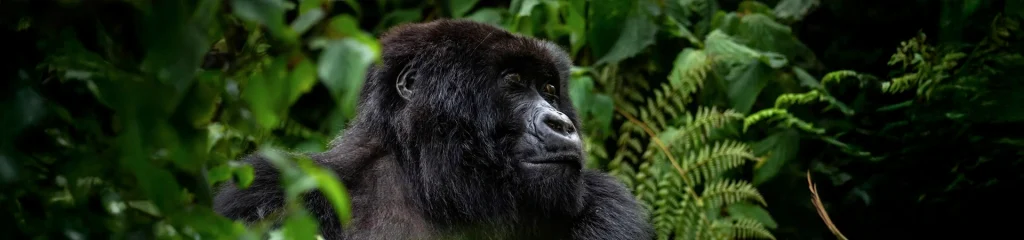
That Help Protect Africa’s Wild Places Travel that gives you goosebumps and gives back When eco‑tourism is done right, every sighting tells a bigger story. A quiet moment with a mountain gorilla helps fund rangers and community projects. A dawn walk with Maasai guides sustains wildlife corridors and family livelihoods. A gentle glide beside a whale shark turns into real data for scientists fighting to keep our oceans wild. This guide brings together five extraordinary, conservation‑positive encounters in East and Southern Africa – the kinds of experiences our Hassle‑free Africa travellers love because they’re both soul‑stirring and purpose‑driven. Think small‑group, low‑impact, high‑meaning; the kind of safaris that leave a light footprint and a long‑lasting legacy. Pack comfortable shoes and an open heart because we’re going deep. https://www.hasslefreeafrica.com/wp-content/uploads/2025/08/HFA-Top5WildlifeEncounters_BlogStory10_V1.mp4 Encounter #1: Gorilla Trekking in Rwanda’s Volcanoes National Park High on the slopes of the Virunga Mountains, where the air is cool and the mist curls through giant lobelias, lives one of the planet’s most extraordinary and fragile treasures: the mountain gorilla. There are fewer than 1,100 mountain gorillas left in the wild, and roughly a third of them live in Rwanda’s Volcanoes National Park. Every single visit here is tightly controlled. Not just to protect the gorillas, but to ensure that your presence makes a tangible difference. A limited number of trekking permits are issued each day, and the bulk of the fee goes directly to conservation. That means your once-in-a-lifetime encounter helps fund anti-poaching patrols, veterinary care, and ongoing research. It’s not just the gorillas who benefit. A portion of each permit fee supports surrounding communities by funding schools, health clinics, and small businesses.The result? Locals have a vested interest in protecting gorillas, creating one of the world’s most successful examples of community-driven conservation. Your trek will likely begin in the early morning, accompanied by experienced trackers and park rangers. The hike can take anywhere from 30 minutes to several hours, winding through thick rainforest and bamboo groves until you hear the rustle tha tmakes your heart leap. Then, you’ll spend a magical, humbling hour watching a gorilla family go about their day with silverbacks standing sentinel, juvenile stumbling in play, mothers cradling tiny infants. Best time to go: June to September and December to February, when the trails are drier and hiking is easier. Eco-tip: Hire a local porter even if you don’t need help with your backpack (the fee supports families and provides alternative livelihoods that reduce pressure on park resources). Encounter #2: Rhino Tracking on Foot in Namibia’s Damaraland In the rugged, ochre-hued wilderness of Damaraland, the horizon seems endless, the air tastes of dust and freedom, and the ground holds ancient stories in every track. Here, in one of Africa’s last great frontiers, lives the world’s largest population of free-roaming black rhinos – and you have the rare chance to meet them on their terms. This is no ordinary safari. You’re not in a vehicle, idling quietly while wildlife passes by. Instead, you lace up your boots and set out on foot, following the knowledge of local trackers from the Save the Rhino Trust (SRT). These skilled men and women read the landscape like a living book; decoding the shape of a spoor, the angle of a broken twig, the faintest whiff on the wind. They guide you, slowly and respectfully, toward these remarkable desert-adapted giants. Every step you take is part of the bigger conservation picture. Your tracking fees directly support SRT’s anti-poaching patrols and monitoring efforts. These rhinos live outside national parks, roaming unfenced wilderness where their survival depends on community stewardship. By giving value to living rhinos through tourism, you help ensure they remain worth more alive than dead. The experience itself is exhilarating. Sometimes hours of patient tracking, sometimes a sudden moment when you round a rocky outcrop and see that unmistakable silhouette against the sky. The thrill of standing quietly, watching a black rhino browse in the wild, is matched only by the deep sense of connection to a landscape that is both harsh and profoundly alive. Best time to go: May to October, during the dry season when tracking is easier and wildlife congregates near scarce water sources. Eco-tip: Travel light, carry plenty of water, and follow your guide’s lead. They’ll know how close is safe for both you and the rhinos. Encounter #3: Whale Shark & MantaRay Conservation in Mozambique’s Tofo If the savannah is Africa’s heartbeat, then Mozambique’s Tofo Beach is where its pulse slows to a languid, sunlit rhythm. Here, warm Indian Ocean currents meet rich plankton blooms, creating a year-round buffet for some of the sea’s most graceful giants: whale sharks and manta rays. Rather than being a passive observer, you can join a team of marine researchers and conservationists who are actively working to understand and protect these species. Operators like Marine Megafauna Foundation and local dive schools offer snorkel or dive trips where every sighting is logged. Photographs of a whale shark’s unique spot pattern, for example, are uploaded to global databases to track individuals across oceans. Manta rays are identified by their belly markings, with each encounter adding valuable data to long-term studies. The beauty of this eco-experience is that your holiday becomes part of the science. Whale sharks, the world’s largest fish, can grow up to 12 metres long, yet they feed only on tiny plankton. Manta rays, with their five-metre wingspans, glide as if flying through liquid sky. Sharing the water with them is a deeply humbling experience. There’s no touching, no chasing, just a quiet awe as they pass within arm’s reach. Tourism here plays a crucial role in protecting marine life. Healthy reef ecosystems and abundant megafauna attract divers from around the world, giving local communities a strong incentive to conserve rather than exploit. Your visit supports livelihoods built on the ocean’s continued vitality. Best time to go: Whale sharks can be seen year-round, but peak sightings are from October to March. Manta rays are more common from November